Skip to content


You can sing every note in tune. Lift both hands. Move across the front of the sanctuary with total abandon. None of it means the Father is receiving your worship.
Jesus made this uncomfortably clear at a well outside a Samaritan town. He was speaking to a woman who had every reason to expect judgment instead of conversation, and He told her something that reframed everything she thought she knew about approaching God: "the true worshipers will worship the Father in spirit and truth, for the Father is seeking such people to worship Him" (John 4:23).
He wasn't describing an emotional peak or a doctrinal checklist. He was naming the two things the Father is actually listening for.
If you've ever sensed something real happen while you moved with a flag in worship and then wondered afterward whether it was Holy Spirit or just your own emotion, this is the question worth settling. Not so you can worship more perfectly, but so you can worship more freely.
In this Article:
- What Is True Worship?
- What Does It Mean to Worship in Spirit?
- What Does It Mean to Worship in Truth?
- Is Expressive Worship Just Emotionalism?
- How Worship Flags Embody Spirit and Truth
- FAQs About Worship in Spirit and Truth
What Is True Worship?
True worship isn't defined by volume, lighting, or musical style. It begins the moment your heart turns fully toward the Lord, whether that happens in a packed sanctuary or an empty room at six in the morning.
The Greek word behind "worship" in John 4:24 is proskuneo. It pictures bowing low, kissing toward, adoring with a reverence that bends the whole body along with the will. This is not casual admiration. It's affection that moves you, sometimes literally.
Scripture consistently pairs worship with the body, not just the heart. In 1 Chronicles 16, when David establishes the tabernacle of worship, he appoints worshippers before he appoints warriors. Worshippers appear more often in Scripture than warriors do, because worship is the primary weapon of spiritual warfare.
Psalm 22:3 says God inhabits the praises of His people. When you worship, you create room for His presence.
Worship is love expressed with your whole being. Romans 12:1 calls you to offer your body as a living sacrifice, which means worship was never meant to stay internal. Spirit, soul, and body are all invited into the exchange, because He is worthy of the whole offering, not just the parts that are convenient.
None of this depends on your circumstances lining up first. You don't need everything to be going right to bring Him something real. You need a heart willing to turn.
This is also why worship never fully belongs to a stage or a set list. A worshipper alone in a car, on a walk, or in a quiet kitchen can offer proskuneo just as fully as a congregation gathered on a Sunday morning. The setting changes. The posture of the heart doesn't have to.
If the idea of whole-being, expressive worship raises a theological question for you, whether this is actually biblical or just emotion dressed up in movement, our free scripture guide walks through the biblical case verse by verse, including the Hebrew and Greek word meanings behind it.
What Does It Mean to Worship in Spirit?
To worship in spirit means your heart is alive and responsive in God's presence rather than running through a rehearsed routine. It flows from communion with Holy Spirit and requires an actual relationship with Jesus, not just familiarity with songs about Him.
This is why a worshipper can sing every line correctly and still walk away feeling empty. Without spirit, worship is just structured sound moving through the air. But when your spirit engages with His, even silence becomes sacred ground. This is the same fire Acts 2 describes falling on the early Church: not a performance, a genuine encounter that changed how people worshipped from the inside out.
Practically, this means a worshipper can test their own experience with a simple question: did something in me actually engage with God, or did I go through familiar motions? Spirit-led worship rarely feels identical twice.
Some days it's quiet and searching. Other days it's full of joy that wants to move. Both are legitimate as long as Holy Spirit, not habit, is leading.
Movement, music, stillness, and tears can all become holy when they're born of Holy Spirit rather than manufactured for effect. The posture matters more than the style. A worshipper standing perfectly still with a surrendered heart is worshipping in spirit just as fully as one whose whole body is in motion.
What Does It Mean to Worship in Truth?
Worship in truth means your praise is grounded in who God actually is, not in how you feel about Him in a given moment. Not your circumstances. Not inherited religious habits. Truth that aligns with the Word: unchanging, eternal, centered in Christ. Jesus said it plainly in John 17:17: "Your word is truth."
You worship in truth when you declare who God is even while your emotions say otherwise. You worship in truth when your life outside the sanctuary reflects the lyrics you sing inside it. You worship in truth when you surrender the version of God you'd prefer and embrace the One revealed in Scripture. Psalm 145:18 promises the Lord is near to all who call on Him in truth.
This gives you a real test for your own worship, not just a feeling to chase. When emotion runs high, truth asks a direct question: is what I'm declaring right now actually in Scripture, or does it just feel true in this moment? When emotion runs low, truth asks the same question in reverse, holding you steady in what God has said even when you don't feel it yet.
Spirit without truth drifts into sentiment. Truth without spirit hardens into routine. Jesus asked for both together, because either one alone falls short of what the Father is seeking.
Is Expressive Worship Just Emotionalism?
This is the question underneath a lot of hesitation around flags, dance, and physical worship: if it looks emotional, is it actually rooted in truth, or is it just a feeling dressed up as spirituality?
Scripture answers this directly, and not gently. David danced before the ark with everything he had, and 2 Samuel 6 records that his own wife despised him for it. His response wasn't to tone it down. He said he would celebrate before the Lord and become even more undignified than that, because he wasn't performing for an audience of people.
Miriam led the women of Israel in tambourine and dance after the Red Sea crossing, and Psalm 149:3 commands God's people to praise His name with dancing.
This doesn't mean anything goes. When David first tried to move the ark the wrong way in 1 Chronicles 13, it cost a man his life. When he tried again in 1 Chronicles 15, this time according to what God had actually prescribed, the outcome was the same king dancing with everything he had, this time in a way Scripture fully commends.
Expressive worship and reverent worship were never opposites. The difference was obedience to truth, not the amount of movement involved.
None of these examples describe worship as emotionalism. They describe worship as truth given a body. The movement was never the problem Scripture addresses. Disconnection from truth is the problem, whether that disconnection shows up as wild movement with no substance behind it or as motionless routine with no life behind it.
Emotionalism happens when feeling replaces truth as the foundation. Expressive worship in spirit and truth happens when truth is so real to a worshipper that the body responds. The difference isn't how much movement is involved. The difference is whether truth is doing the leading.
How Worship Flags Embody Spirit and Truth
This is where flags find their place: not as decoration, but as a physical answer to what's already happening internally.
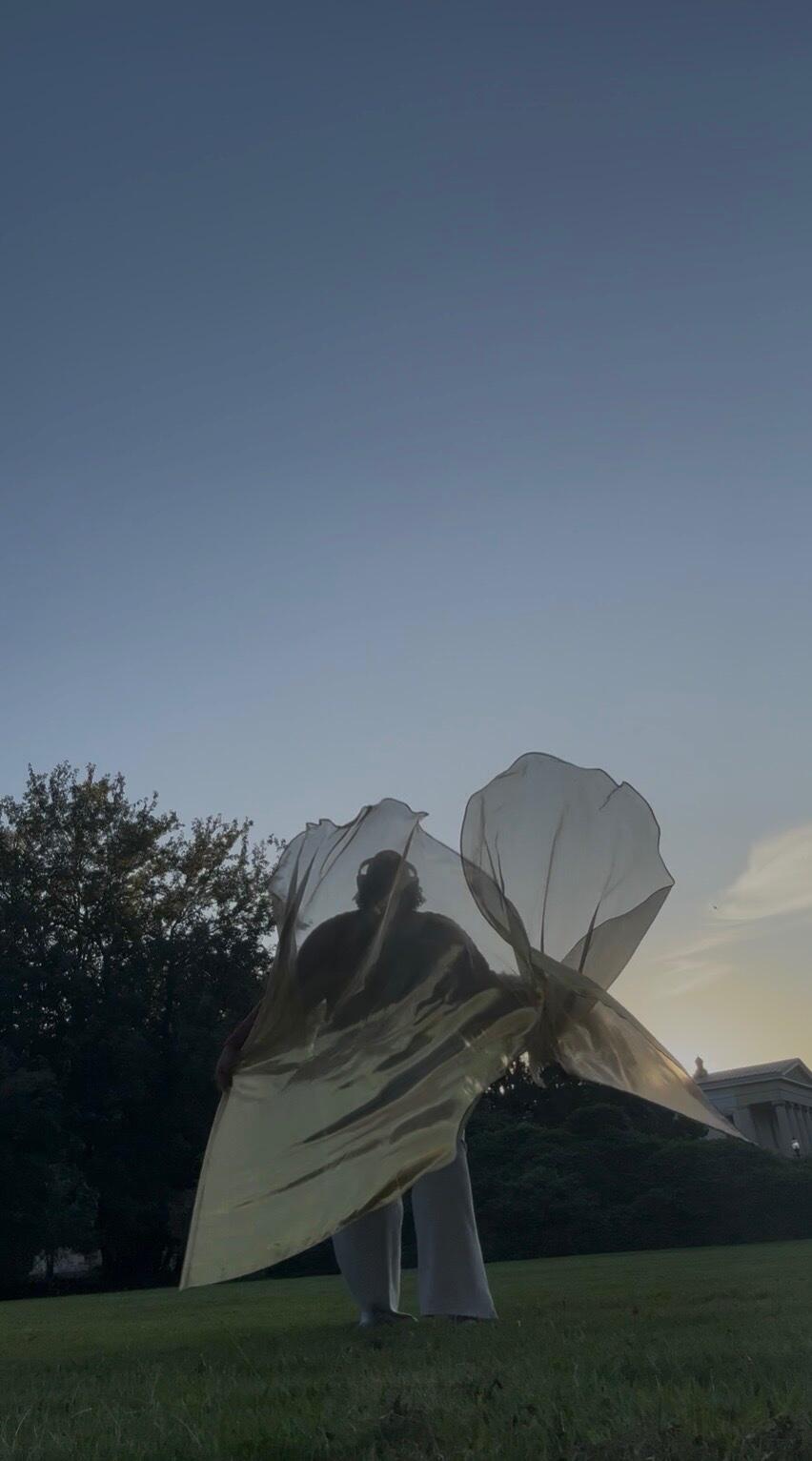
A flag cannot manufacture spirit, and it cannot manufacture truth either. What it can do is give shape to worship that's already alive in both. When a worshipper lifts a flag from a heart genuinely engaged with Holy Spirit and genuinely anchored in the Word, the flag becomes an extension of something real rather than a substitute for it.
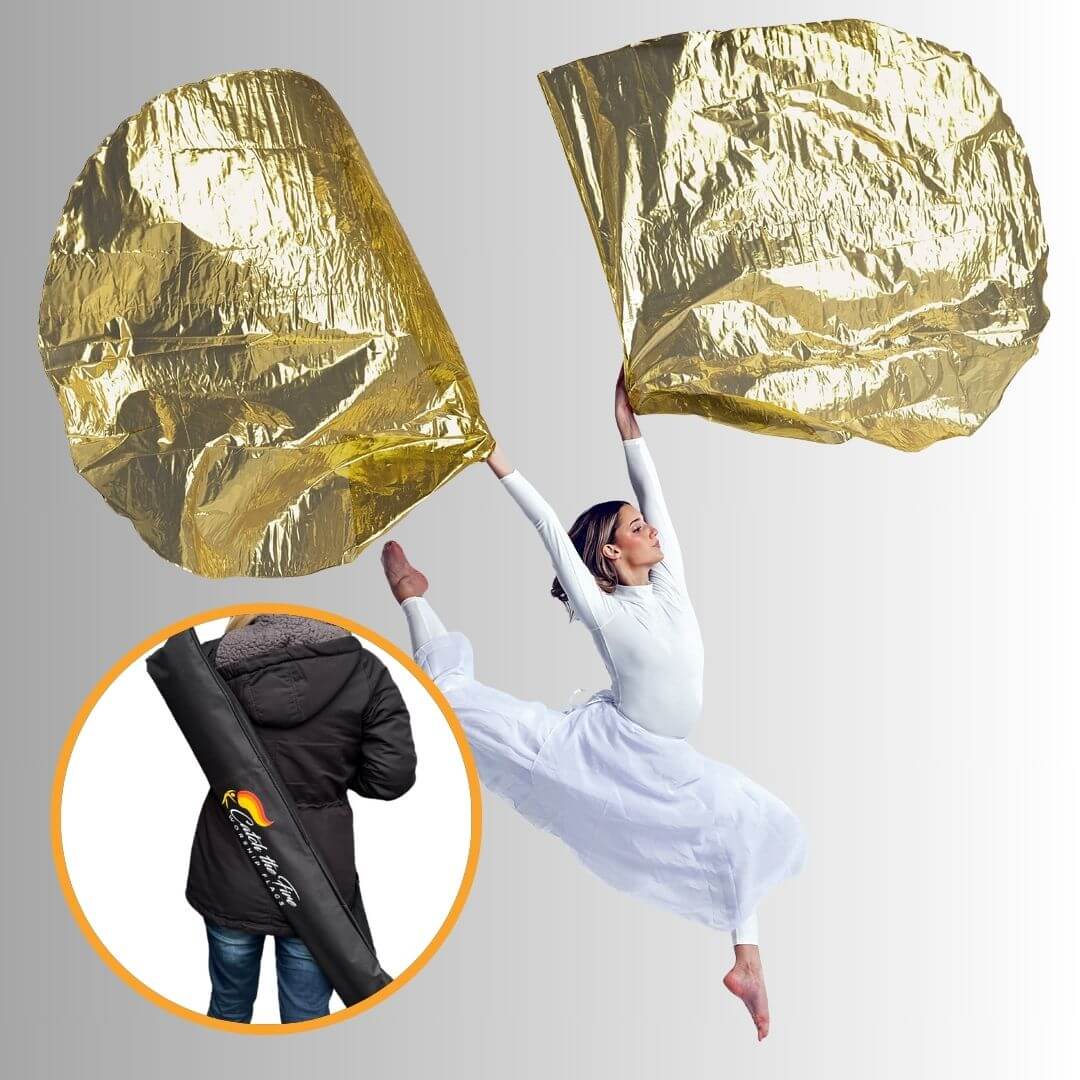
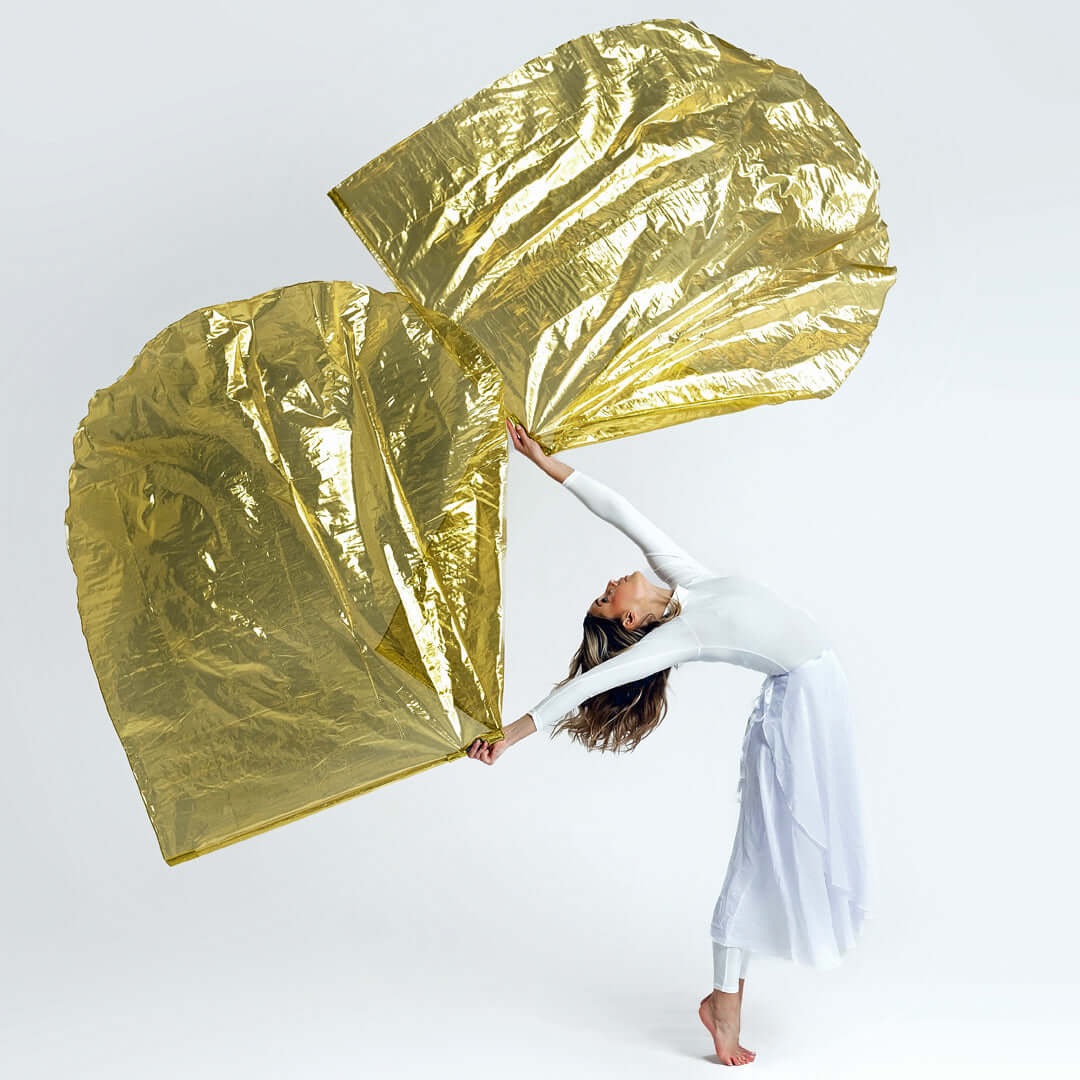
Color and movement communicate biblical meaning that reinforces the truth being declared. A flag from the Throne Room Collection reflects the reverence and surrender of dwelling in God's presence, drawn from the glory described in Revelation 4 and 5. A flag from the Revelation of God Collection points toward the deeper encounter Scripture describes as beholding God and being changed by what you see, the process 2 Corinthians 3:18 names directly.
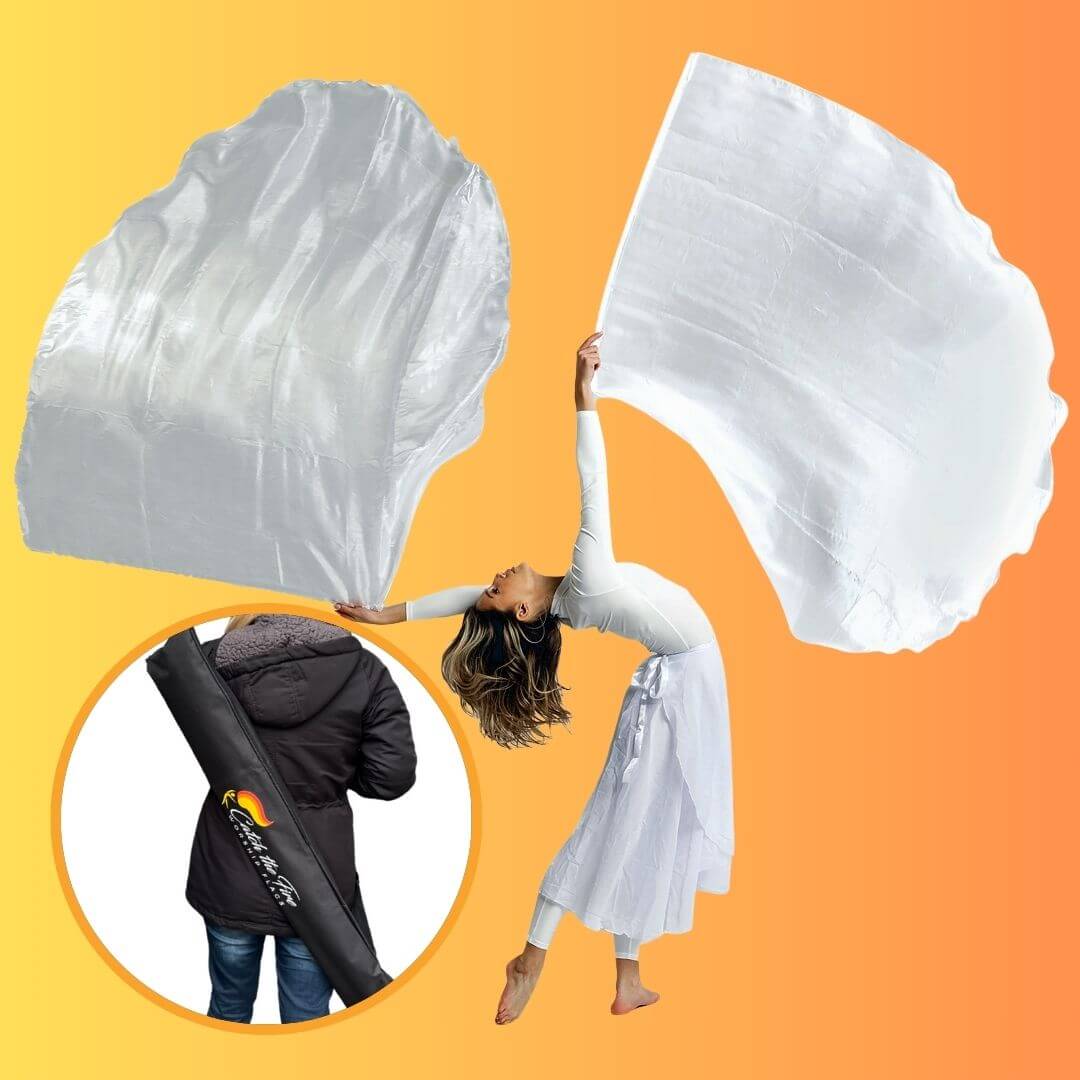
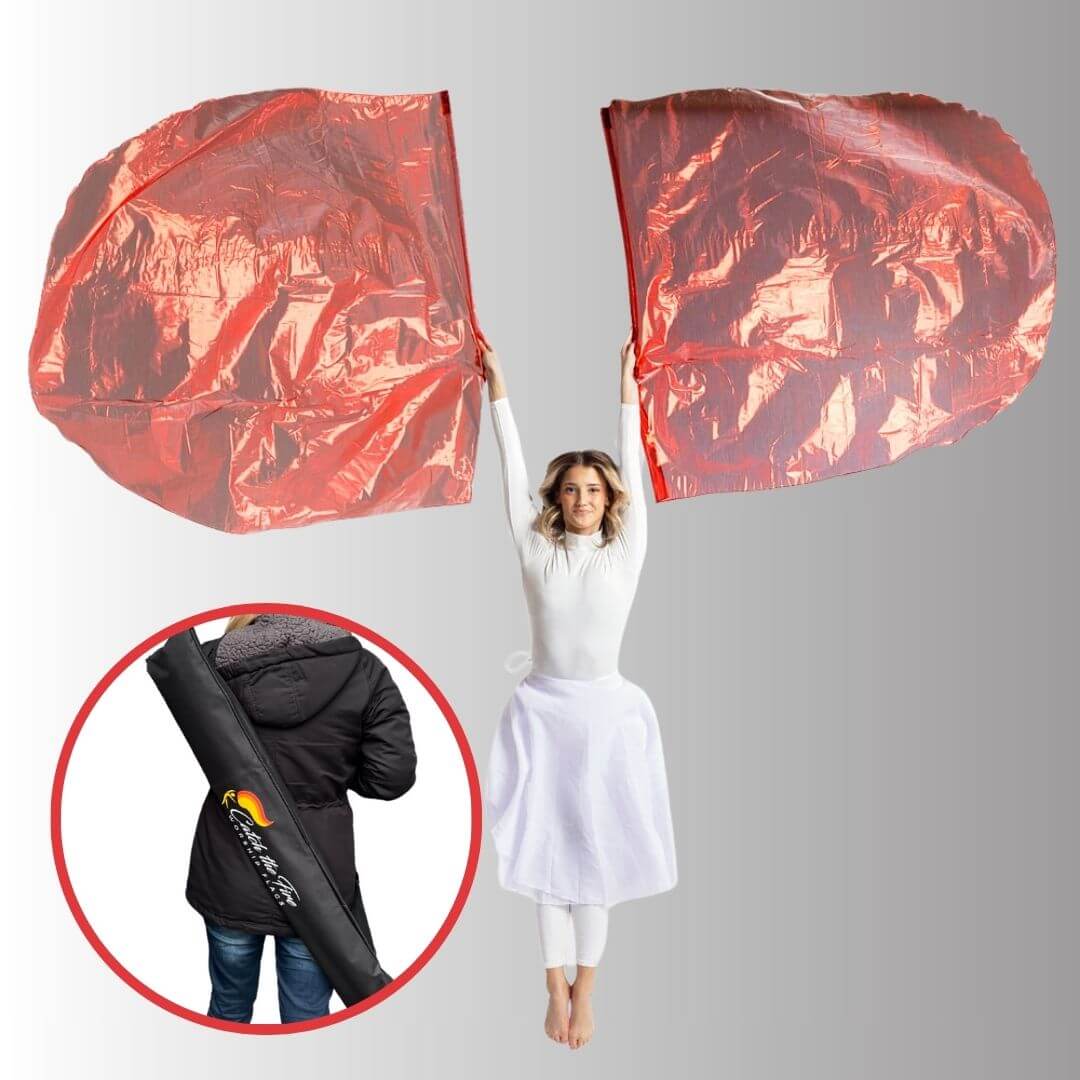
The Fan Into Flame Worship Flags speak to the fire this post is named for: worship that starts small and internal and grows as it's given room to move. Lightweight and vivid, they're designed for a worshipper who already has something stirring within and wants a physical way to let it spread, whether in a private prayer time or a corporate gathering.
Picture what this looks like in an ordinary week. A worshipper spends time in Scripture, lets one truth take root, and then reaches for a flag that visually echoes what was just read. The movement that follows isn't decoration layered on top of devotion. It's devotion becoming visible.
None of these flags create the spirit or the truth a worshipper brings to them. They give worship that already has both a way to be fully, visibly expressed.
If this raises the practical question of what a worship flag actually is or how one might fit into your own worship life, What Are Worship Flags? lays out the basics from the ground up. For a look at how this same posture of extravagant, spirit-and-truth surrender shows up in the woman who poured out her alabaster jar, Extravagant Worship with Flags: Pouring Out Devotion unpacks the story in full. And if you've run into pushback from a more traditional church background, Are Worship Flags Against the Regulative Principle of Worship? answers the objection directly, scripture by scripture.
FAQs About Worship in Spirit and Truth
What does it mean to worship in spirit and truth?
It means worship led by Holy Spirit and grounded in the truth of God's Word. Heart and doctrine, intimacy and integrity, held together rather than separated.
What is the Greek word for worship in John 4:23-24, and why does it matter?
The word is proskuneo, which pictures bowing low and adoring with reverence. It shows that worship was never meant to stay purely internal. Scripture assumes the body is part of how a worshipper responds to God.
Can worship be expressive, like dance or flags, and still be worship in truth?
Yes. Expressive worship through movement, dance, and banners is modeled throughout Scripture, from David dancing before the ark to the worship described in Revelation. What matters is whether truth is leading the movement, not whether movement is present at all, and whether that movement is offered in obedience rather than for its own sake.
Does worshiping in spirit and truth rule out physical expression?
No. Spirit and truth describe the source and grounding of worship, not a restriction on the body. Romans 12:1 calls for worship that includes the body as a living sacrifice, which is the opposite of a purely internal, motionless requirement.
How do I know if my worship is pleasing to God?
God is watching your heart before He's watching your style. If you're coming to Him in surrender, honesty, and a genuine hunger for Him rather than an emotional experience for its own sake, you're bringing Him what He's seeking. Perfection was never the requirement. A true heart was.
Catch the Fire Worship Flags is a global pioneer in prophetic flag worship, empowering flagging ministers around the world with handcrafted flags, biblical teaching, and Spirit-led tools for personal worship. Founded in 2011, we remain the original online resource for worship flags that shift atmospheres and deepen intimacy with God. We offer a wide selection of handcrafted worship dance flags for those who are called to flag... whether through prophetic movement, personal worship, or dance ministry. Our premium collection includes sheer, shimmer, metallic, and multi-layer flags designed for church services, street ministry, stage choreography, and dance performance. If you feel called to flag and are drawn to worship through movement, you're in the right place.