Skip to content


Not every worship flag is created the same way. Two flags can look nearly identical side by side, yet the hands and the heart behind them are never quite the same.
Scripture has an answer for why that difference matters, and it predates worship flags entirely.
Long before craftsmanship and calling were separate conversations, God filled one specific person with His Spirit for one specific sacred task. His name was Bezalel, and the principle God established through him still shapes how a worship flag should be made today.
Jump to a section:
- Who Was Bezalel?
- Not Bezalel Alone
- What This Means for Every Maker Today
- Why Andrea Sees Sound as Color
- What This Looks Like at Catch the Fire Worship Flags
- FAQ
Who Was Bezalel?
In Exodus 31:1-5, God spoke Bezalel's name directly to Moses, naming him for a specific assignment rather than leaving the Tabernacle's construction to whoever happened to be available. Before Bezalel touched gold, silver, or a single cut stone, God filled him "with wisdom, with understanding, with knowledge and with all kinds of skills" (Exodus 31:3).
God's assignment for Bezalel wasn't decorative work. He was tasked with the Ark of the Covenant, the lampstand, the priestly garments, and the altar, the most sacred objects in Israel's worship. Every detail mattered because every object would hold God's presence among His people. Skill alone couldn't be trusted with an assignment like that.
That order matters. God didn't wait to see what Bezalel could produce and then decide whether to bless it. He filled him with His Spirit first, then released him into the work. The skill in Bezalel's hands wasn't self-made; it flowed from a Spirit-given source before it ever touched fabric, metal, or wood.
Bezalel came from the tribe of Judah, grandson of Hur, a family already woven into Israel's story of faithfulness in the wilderness. God didn't choose a stranger for this work. He chose someone whose lineage and character He already knew.
Not Bezalel Alone
God didn't stop with one man. Exodus 31:6 names Oholiab alongside Bezalel, giving him skill to work at his side on the same sacred project. The anointing of the maker was never meant to rest on a single exceptional individual.
Exodus goes further still. Later chapters describe skilled women spinning yarn for the Tabernacle's curtains (Exodus 35:25), ordinary hands doing careful, sacred work as part of the same calling. These women aren't named individually the way Bezalel and Oholiab are, yet Exodus treats their contribution with the same seriousness. Their skill wasn't ornamental; it became curtains that surrounded God's presence in the Tabernacle.
The pattern God set through Bezalel wasn't a one-time miracle reserved for a genius craftsman. It was an invitation extended to every willing heart God chose to fill.
This matters for how a worship flag gets made now. The principle isn't that one maker somewhere holds a rare, unrepeatable gift. It's that God still fills specific people, in ordinary workshops and quiet sewing rooms, for sacred purposes He names Himself.
What This Means for Every Maker Today
The location where a flag is sewn was never the point of Bezalel's calling, and it isn't the point now. What matters is whether the hands doing the work are surrendered to the same Spirit that filled him.
Anyone can learn to sew fabric onto a pole. Fewer are creating with a spiritual purpose behind every stitch. Prayer, worship, and Godly character give a craft its substance; the country of origin, the price point, or the speed of production do not.
This shifts the question a worshipper is really asking when shopping for a flag. The question isn't only "is this well made and reasonably priced." It's closer to "was this made by someone surrendered to the same Spirit I'm asking to move through me when I lift it."
A flagging minister doesn't need formal training in Exodus to benefit from the Bezalel principle. Understanding it simply changes how a flag gets held: not as a prop picked up before a song, but as a tool shaped by prayer long before it reaches a worshipper's hands.
A related post, Does the Flag Maker Matter? The Heart Behind the Flags, walks through practical, visible ways to discern a maker's heart before buying. This post stays underneath that discernment, at the biblical foundation holding it up.
Why Andrea Sees Sound as Color
Founder Andrea York has synesthesia, a rare intertwining of the senses where sound and color aren't separate experiences. Growing up, she would close her eyes during worship and see color moving with the music, something she assumed she needed to set aside to focus properly.
A storytelling workshop years later changed that. An instructor stopped her mid-sentence during introductions and named what she was describing: synesthesia. Andrea had never heard the word before, yet it explained something she had quietly experienced her entire life.
That gift didn't stay in the background. Andrea has served as a Bible teacher since 2003 and currently serves as Prophetic Director at her church, testing and stewarding prophetic words as part of her calling. When she designs a worship flag, she isn't only choosing colors that look pleasing together; she is asking Holy Spirit what a specific sound or word looks like, then translating that answer into fabric.
This is the Bezalel principle in a modern setting. God still fills specific people with specific gifts for specific sacred work, and synesthesia is simply the shape that gift took for one flag maker.
The same Spirit who filled Bezalel with skill for gold, silver, and stone can fill someone today with an unusual sensitivity to color and sound, for the same reason: to create something holy.
What This Looks Like at Catch the Fire Worship Flags
Every flag made here begins in worship rather than at a cutting table. Fabric gets chosen and paired with prayer over the specific order it will become, not only over general inventory. This process takes longer than assembly-line production, and the pace is intentional rather than accidental.
This same conviction shaped the free Biblical Reference Guide referenced earlier in this post. Six months of study into every mention of flags, banners, and standards in Scripture grew out of a similar question. Does the theology actually hold up, and does it matter who is doing the work?
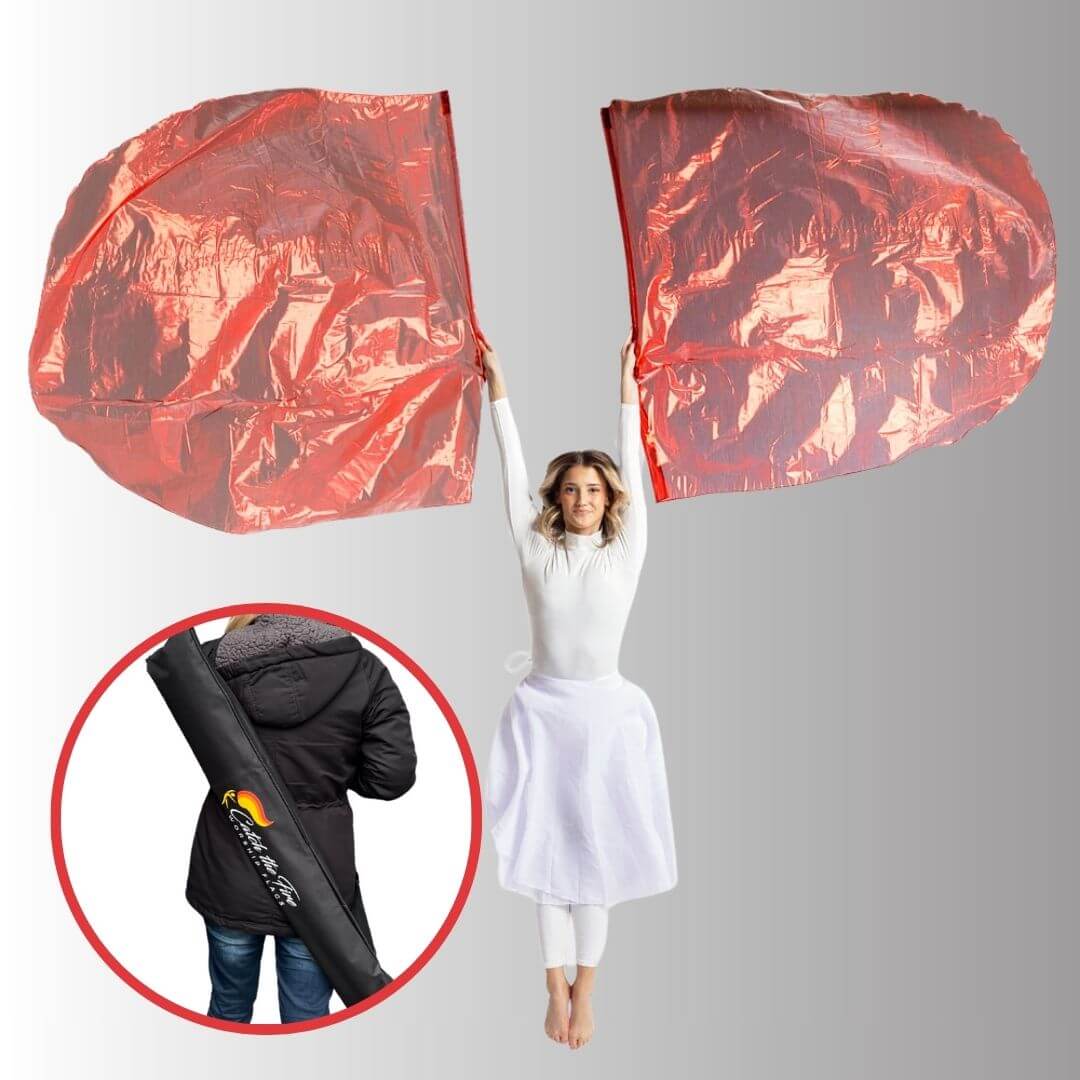
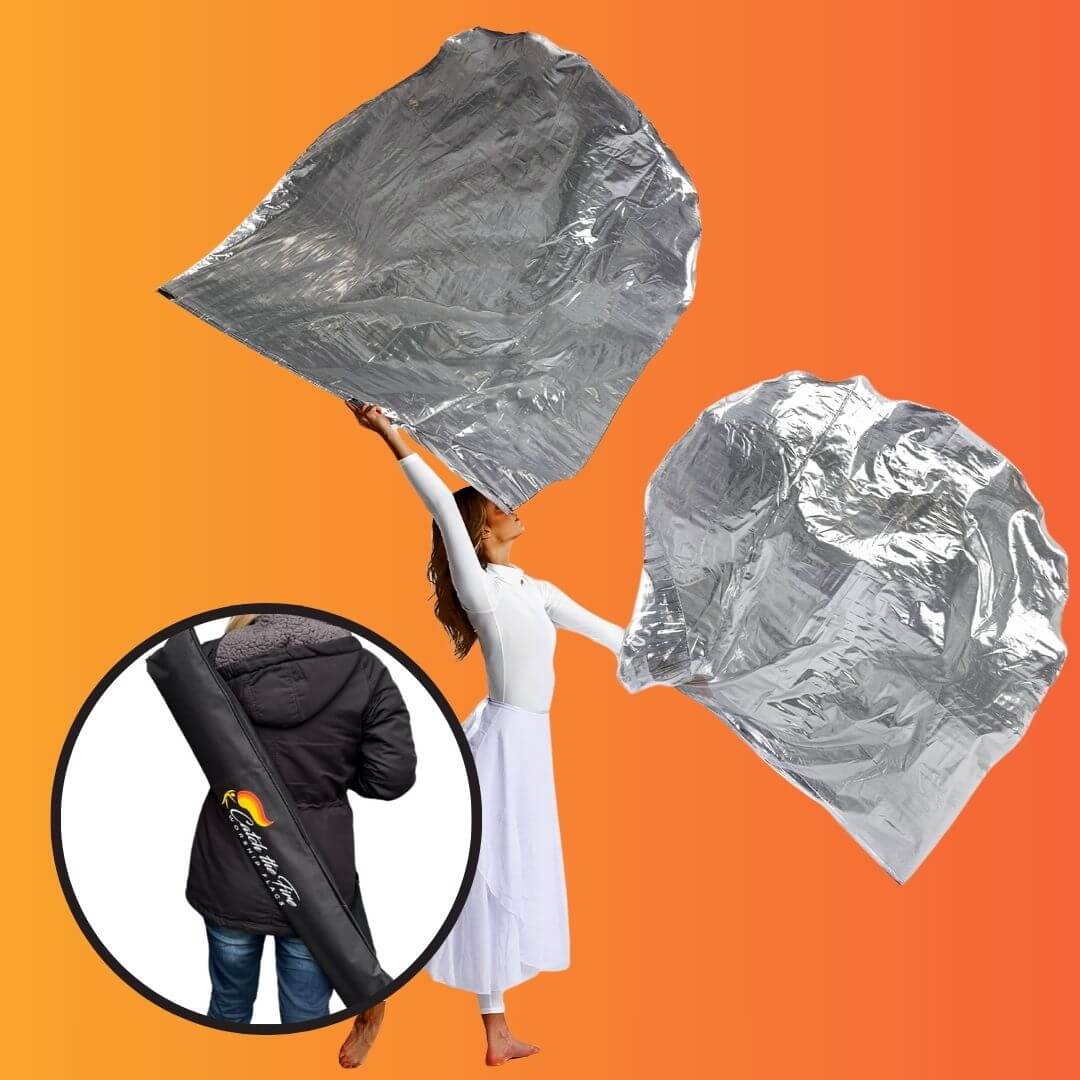
The Anointed Worship Flags hold this principle in their name as much as their design, created as a physical reminder that skill and calling were never meant to be separate. Lifting one isn't just lifting fabric. It's lifting something shaped by the same pattern God set through Bezalel: skill placed in willing hands for a purpose bigger than the hands themselves.
FAQ
Is the Bezalel principle only about worship flags?
No. Exodus 31 speaks to any sacred craft, from the Tabernacle's curtains to a modern worship tool. Worship flags are simply one present-day expression of a much older biblical pattern.
Does this mean flags made by an unskilled or non-Christian maker are wrong to use?
Scripture emphasizes the maker's calling and character, not the buyer's spiritual history. Even so, many worshippers find it meaningful to know something about the hands and heart behind a flag they'll use before God.
What is the difference between talent and anointing?
Talent is a natural ability. Anointing is God's Spirit given for a specific purpose. Bezalel likely already had some skill before Exodus 31, yet God still filled him with His Spirit before assigning him the Tabernacle's sacred work, a sign that skill alone was never considered sufficient for holy craftsmanship.
Who was Oholiab, and why does he matter to this teaching?
Oholiab was named alongside Bezalel in Exodus 31:6, given skill to work at his side on the same sacred project. His inclusion shows the anointing of the maker was never limited to one exceptional individual.
How can I tell if a worship flag was made with this kind of intentionality?
Character and process leave traces, even in an online storefront. Does the Flag Maker Matter? The Heart Behind the Flags walks through specific, practical signs to look for before buying.
Is synesthesia mentioned in the Bible?
No, synesthesia is a modern term for a sensory experience, not a biblical one. What Scripture does describe is God filling specific people with specific gifts for specific sacred work, and synesthesia fits that same pattern as one gift among many.
Curious how this same pattern shows up elsewhere in worship? What Are Worship Flags? traces the fuller biblical case for flags, banners, and standards from Genesis through Revelation.
Catch the Fire Worship Flags is a global pioneer in prophetic flag worship, empowering flagging ministers around the world with handcrafted flags, biblical teaching, and Spirit-led tools for personal worship. Founded in 2011, we remain the original online resource for worship flags that shift atmospheres and deepen intimacy with God. We offer a wide selection of handcrafted worship dance flags for those who are called to flag... whether through prophetic movement, personal worship, or dance ministry. Our premium collection includes sheer, shimmer, metallic, and multi-layer flags designed for church services, street ministry, stage choreography, and dance performance. If you feel called to flag and are drawn to worship through movement, you're in the right place.