Skip to content


A name in Scripture is never just a label. It's a claim about character, and God's names are no exception. Every time the Bible records a new name for God, it's recording something true about who He is that a person needed to know in that moment.
That's why His names show up everywhere in Scripture: sung in worship, invoked in intercession, and spoken as prophetic promise before the outcome was ever visible.
This post walks through all three uses, then looks at three worship flags built specifically around names of God: Lion of Judah, Jehovah Sabaoth, and Consuming Fire.
If you're curious whether this is found in scripture, Catch the Fire Worship Flags built a free guide for exactly that question: 50-plus scripture references, Hebrew and Greek word studies, and historical context, called Are Worship Flags Biblical?
Why God's Name Releases Spiritual Authority in Worship
When Moses asks God who he should tell Pharaoh sent him, God doesn't answer with a title. He answers with a name: "I AM WHO I AM" (Exodus 3:14). His answer is self-revelation, not evasion.
God is telling Moses that His name is bound up with His existence and His character, not assigned to Him the way a person might be named after a relative or a season.
That's why worship in Scripture keeps circling back to the name itself rather than only to what God has done.
O LORD, our Lord, how majestic is your name in all the earth ~Psalm 8:1.
From the rising of the sun to its setting, the name of the LORD is to be praised ~Psalm 113:3.
Praising His name isn't a stylistic choice. In Hebrew thought, the name carries the reputation, the authority, and the presence of the one who bears it.
That's also why Scripture gives God so many different names instead of settling on one. There is one God, with many names.
El Shaddai, God Almighty, meets Abram at ninety-nine years old with a promise that requires more strength than Abram has on his own (Genesis 17:1). El Roi, the God who sees, is the name Hagar gives Him in the wilderness, alone and unseen by everyone else who mattered to her (Genesis 16:13).
Neither name replaces the other. Each one reveals a facet the person needed at that specific moment, which is exactly what worship through God's names is for: matching the truth being declared to the need in front of you.
Praying God's Name in Intercession
After Israel builds the golden calf, Moses doesn't intercede on the basis of Israel's behavior. He intercedes on the basis of God's own name and character, reminding Him of His covenant with Abraham, Isaac, and Jacob (Exodus 32:11-13). A few chapters later, God answers that kind of appeal by proclaiming His own name in full:
The LORD, the LORD, a God merciful and gracious, slow to anger, and abounding in steadfast love and faithfulness. ~Exodus 34:6
The name isn't a title God holds. It's a description of what God actually does, spoken by God Himself.
Jesus teaches the same pattern for prayer.
Whatever you ask in my name, this I will do, that the Father may be glorified in the Son ~John 14:13
Praying in Jesus's name was never a formula tacked onto the end of a request. It's an appeal to His authority and His finished work rather than to the strength of the person praying. Intercession built on a name isn't asking God to be talked into something. It's asking Him to act consistently with who He has already revealed Himself to be.
Declaring God's Name as Prophetic Promise
After God provides a ram in the place of Isaac, Abraham names that mountain Jehovah Jireh, "The LORD will provide," and Scripture adds a note: "as it is said to this day" (Genesis 22:14). The name outlives the moment it described. It becomes a promise later generations could stand on, not only a memory of what happened once.
Scripture also records the name being declared before the outcome is visible, not only after. When King Jehoshaphat faces an army too large for Judah to fight, he doesn't send soldiers out first. He sends singers, appointed to declare God's character ahead of the army, while the battle's outcome is still completely unknown (2 Chronicles 20:21).
And when they began to sing and praise, the LORD set an ambush
~2 Chronicles 20:22
The declaration came first. The breakthrough came after it, not before.
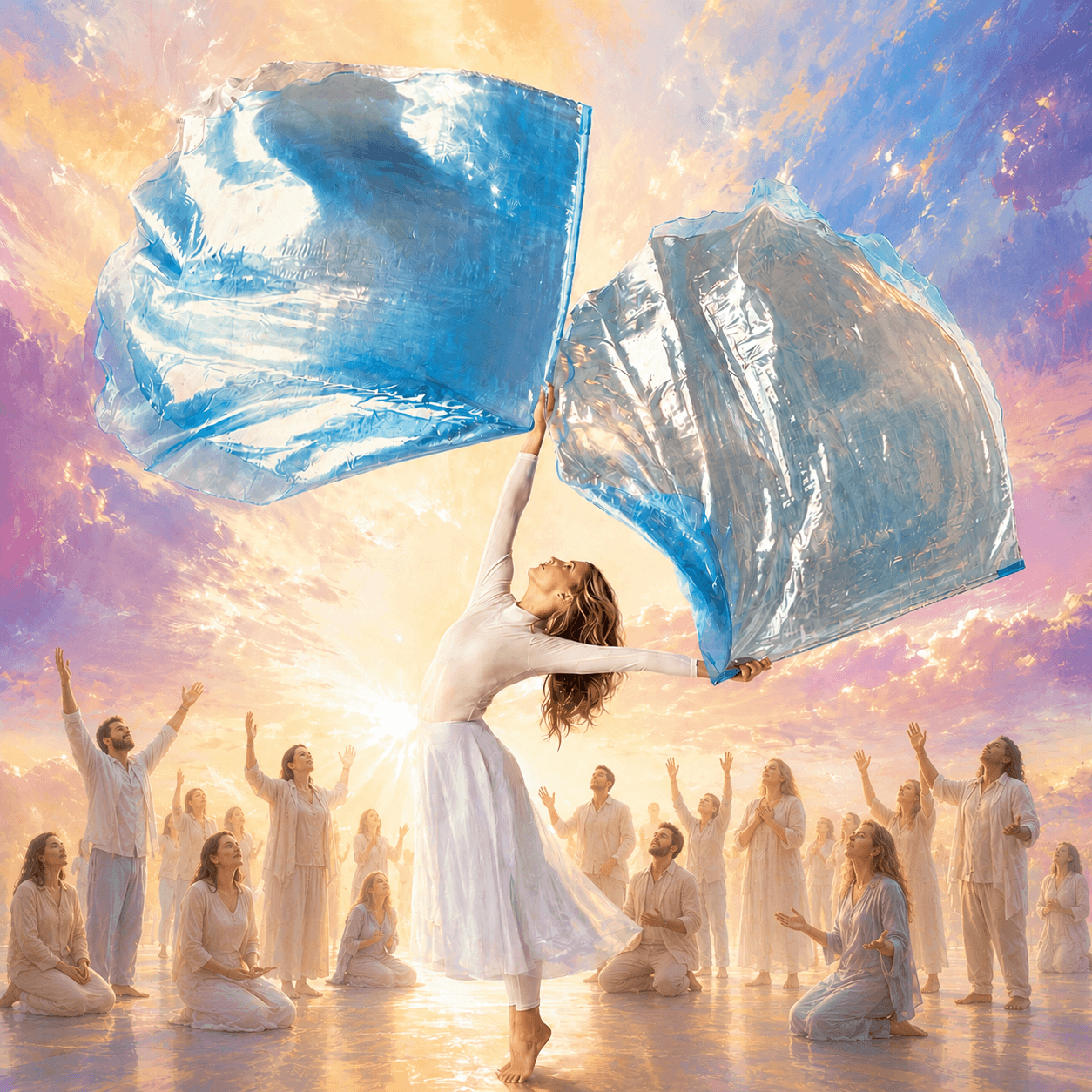
It's why a worship flag is a prophetic declaration, rather than simply a decoration to coordinate with the decor. Declaring God's name over a situation isn't describing what's already obvious. It's speaking what Scripture says is true before it's visibly true yet, the same way Jehoshaphat's singers did.
Prophesying With the Names of God
The Names of God Collection carries several of God's revealed names in fabric form. Three are worth understanding in depth, because each one gives worship, intercession, and prophetic declaration a specific name to stand on.
Lion of Judah is revealed in Revelation 5:5, where Christ is named the Lion of the tribe of Judah, the One who has already conquered.
Worshipped, this name exalts a victory that's already secured. Interceded, it asks Christ's authority to be made evident in a situation that still looks unresolved. Declared prophetically, it's the name that speaks against intimidation before intimidation has actually lost its grip.
Jehovah Sabaoth, the Lord of Hosts, is the name David spoke over Goliath before he ever threw a stone (1 Samuel 17:45). It identifies God as commander over armies no human eye can see, already in motion whether or not circumstances show it yet.
Interceded, it's the name for a battle that feels too large to carry alone. Declared prophetically, it's a statement that the outcome is already being arranged by a command structure bigger than the visible fight.
Consuming Fire comes from Deuteronomy 4:24, repeated in Hebrews 12:29. It names God's holiness as active, burning away what shouldn't remain rather than simply tolerating it. Worshipped, it exalts God's holiness as something to be desired, not feared from a distance. Declared prophetically, it's the name for a situation that needs purifying, not managing.
In practice, a flagging minister recognizes the need of the situation (or atmosphere) first, then chooses the name that matches it, and prays it as declaration rather than request:
- Lion of Judah, roar over this fear. Let intimidation lose its grip the moment this flag lifts.
- Lord of Hosts, command what I cannot see on behalf of this battle. Move the armies fighting for me into position.
- Consuming Fire, fall over what needs to change here. Burn away what shouldn't remain, and leave only what's Yours.
None of this depends on choreography or performance skill. The physical lifting of the flag is what turns the declaration from private thought into something spoken into the room. Holy Spirit does the rest.
A declaration made under one of these flags isn't meant to stay contained inside the prayer time. Flagging ministers who use these names regularly report the same pattern: the declaration starts showing up in how they walk into a hard conversation, wait on a diagnosis, or answer an email before they've fully calmed down.
For a season that feels more like contending than resting, the Worship Warrior Collection is created for spiritual warfare, because the weapons of our warfare are spiritual and can tear down strongholds.
They are bold color, layered movement, made for prayer that feels like a fight because it is one. Jehovah Sabaoth belongs there as much as He belongs in a quieter moment of worship.
Scripture never treats God's name as decoration. It's declared in worship, appealed to in intercession, and spoken as promise before the outcome is visible.
Lion of Judah, Jehovah Sabaoth, and Consuming Fire each carry a different facet of that same pattern, and each one gives a flagging minister a specific name to stand on rather than a vague feeling to work up.
Explore the full the full collection to find the name your current season needs.
Two related reads worth your time next: Biblical Color Meanings for Worship Flags, the full symbolism guide covering every color in the collection, and What Are Worship Flags?, a foundational read for understanding where this ministry begins.
FAQs
Q: What does it mean to prophesy with a worship flag?
A: It means naming a specific situation, choosing the name of God that matches it, and lifting the flag while declaring that name as true before the outcome is visible, the same pattern Jehoshaphat's singers used in 2 Chronicles 20.
A: Each name reveals a different facet of His character, matched to what the person receiving it needed to know at that moment. El Shaddai met Abram's need for strength. El Roi met Hagar's need to be seen. The names aren't interchangeable titles, they're specific revelations.
A: The Jehovah Sabaoth flag declares that God commands armies no one can see. It's used over anything that outsizes a person's own strength.
A: The Lion of Judah flag declares Christ's authority over whatever's attempting to intimidate. The prayer prophesies His victory before it's visible.
A: The Consuming Fire flag declares God's refining presence over whatever shouldn't remain.
A: No performance skill is required. This is personal worship, not choreography. Holy Spirit meets a flagging minister in the movement she already has.
Catch the Fire Worship Flags is a global pioneer in prophetic flag worship, empowering flagging ministers around the world with handcrafted flags, biblical teaching, and Spirit-led tools for personal worship. Founded in 2011, we remain the original online resource for worship flags that shift atmospheres and deepen intimacy with God. We offer a wide selection of handcrafted worship dance flags for those who are called to flag... whether through prophetic movement, personal worship, or dance ministry. Our premium collection includes sheer, shimmer, metallic, and multi-layer flags designed for church services, street ministry, stage choreography, and dance performance. If you feel called to flag and are drawn to worship through movement, you're in the right place.