Skip to content


Biblical color meanings are the scriptural associations carried by each color used in worship flags, drawn from the tabernacle, the priestly garments, and prophetic visions throughout scripture. Every hue on a worship flag has a history in the Word, and when you know what you're using for worship, you're not just adding beauty to a room. You're making a declaration.
This guide covers 15 colors used across our worship flag collections, with the scripture behind each one, how flagging ministers use it in intercession and warfare, and how to let color, not formula, lead your worship.
Why Color Matters in Worship
Color is part of God's original design. He painted creation with intentional variety, and from the priestly garments in Exodus to the rainbow surrounding His throne in Revelation, color reveals who He is. Scripture never treats color as decoration. It treats color as language, and language is meant to be understood, not just admired.
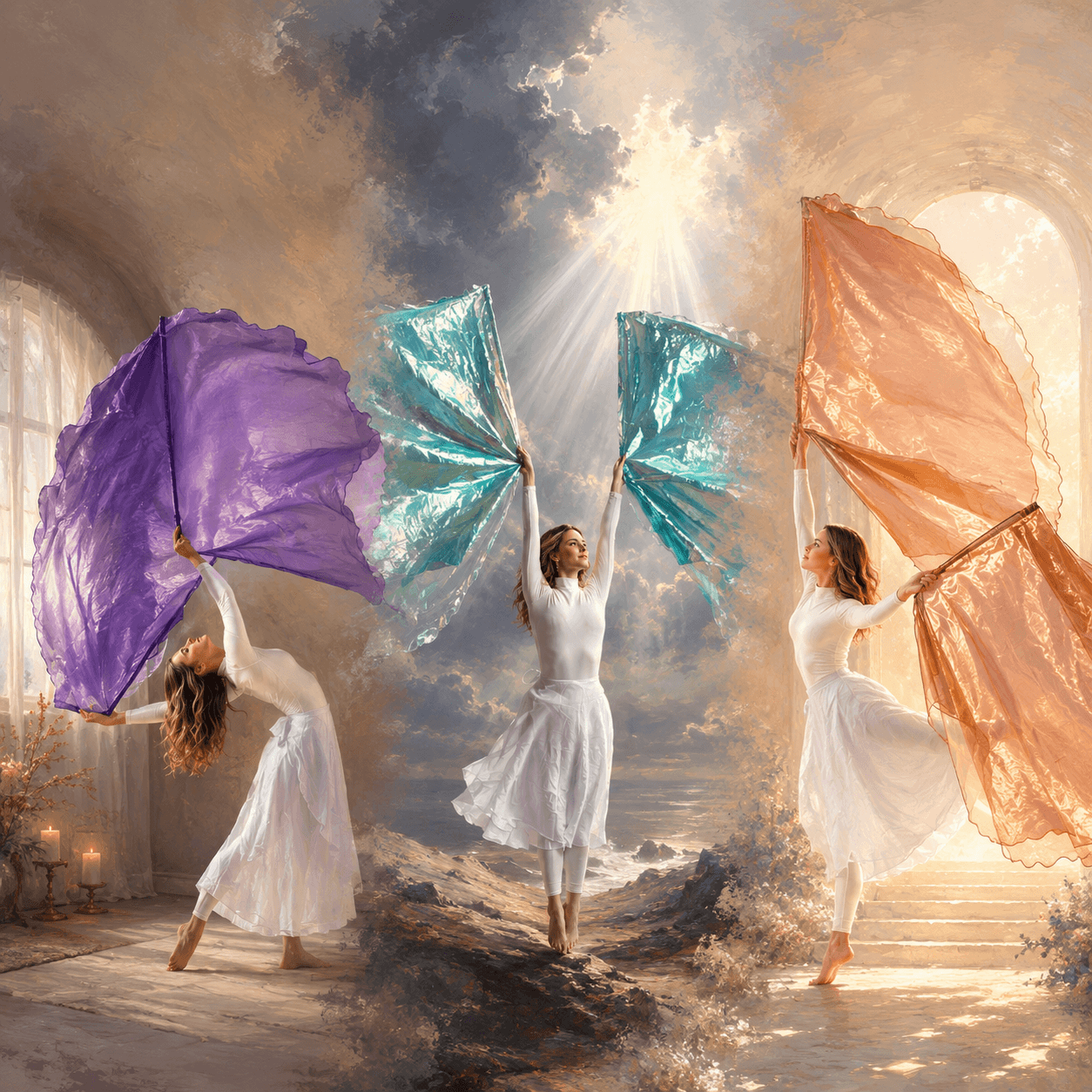
Worship flags take that language and move it. Each sweep of fabric becomes a visual sentence. When you worship with a blue flag, you're not choosing a favorite shade. You're declaring heaven's authority over the room. When gold ripples through the air, you're proclaiming His glory and kingship in a way words alone can't carry.
Movement adds a dimension that speech doesn't reach, and color adds specificity to that movement.
This is the foundation of the Bezalel Principle: God fills the maker with skill for a purpose, and what the maker creates carries that purpose into the room. Bezalel wasn't given a generic assignment in Exodus 31. He was filled with Spirit for specific, skilled work, and the colors used in that work, the blue, purple, and scarlet threads of the tabernacle, weren't chosen at random.
Every worship flag made in that same spirit carries the same intentionality. Color is one of the clearest ways that purpose gets communicated from the maker's hands into the worshipper's movement.
How to Discern Prophetic Color Meanings
Start with scripture. Every color below has a biblical basis, whether from the tabernacle, a prophetic vision, or a natural metaphor woven through the text. This isn't guesswork. The associations below are drawn from consistent patterns across the Old and New Testaments, not a single verse taken out of context.
Then pay attention to how that color shows up in your own worship, your dreams, and the world around you. If a color keeps reappearing in your worship life, ask Holy Spirit what He's highlighting.
Color can be a language of intimacy. He may be speaking something deeply personal, and the meanings below are a starting point for that conversation, not a rigid formula to apply mechanically.
A practical rhythm many flagging ministers use: read the scripture behind a color before worshipping with it, sit with what stands out, then let that understanding shape the movement itself rather than performing a movement first and assigning meaning after.
This is also where community matters. If you're new to flagging, ask a more experienced flagging minister what she senses when she reaches for a particular color, and compare it against what you're discovering in scripture yourself. Prophetic discernment grows sharper in relationship, not isolation, and color symbolism is no exception.
The Complete List of Biblical Color Meanings
Below is the full list of prophetic color meanings across our collections, drawn from scripture, intercessory practice, and worship movement. Each color links to a full guide with the complete biblical background, key scriptures, and specific application in worship.
To see what each color declares on a worship flag and how to choose yours, read our guide to flag colors and their meanings for worship.
| Color | Core Biblical Meaning | Key Scripture |
|---|---|---|
| Red | Blood of Jesus, covenant, fire of the Spirit | Exodus 12:13 |
| Gold | Glory, kingship, divine refinement | Exodus 25:11 |
| Yellow | Hope, praise, joy, childlike faith | Psalm 16:11 |
| Green | New life, healing, restoration | Psalm 1:3 |
| Orange | Zeal, harvest, warfare, fire of God | Ezekiel 1:4 |
| Rainbow | Covenant, God's promises, His radiance | Genesis 9:13 |
| Blue | Heaven's authority, revelation, obedience | Numbers 15:38-39 |
| Light Blue | Peace, God's presence, prophetic intercession | John 3:8 |
| Purple | Royalty, intercession, identity | Exodus 26:1 |
| Pink | Compassion, healing from grief, delight | Romans 3:25 |
| Silver | Redemption, purity, the voice of God | Psalm 12:6 |
| White | Holiness, surrender, victory | Isaiah 1:18 |
| Bronze | Judgment, strength, purification | 1 Kings 7:23-26 |
| Copper | Refining fire, priesthood, endurance | Zechariah 13:9 |
| Scarlet | Sacrifice, covenant, royalty, redemption | Isaiah 1:18 |
Red
Red carries the weight of covenant. In scripture, it's the blood on the doorposts, the veil of the Holy of Holies, the wine poured out at the last supper. Red isn't subtle, and it was never meant to be.
When a flagging minister lifts a red flag, she's declaring the truth heaven released once for all: the Lamb was slain, and there is no worship without the blood. Use red during communion, breakthrough intercession, or any moment that calls for bold, unhedged declaration.
Gold
Gold is the metal of the tabernacle and the streets of heaven. It speaks glory, kingship, and divine refinement, the wealth of a Kingdom that doesn't run out no matter how much is given away. When gold moves through the air, it's a visual proclamation of who sits on the throne.
Many flagging ministers reach for gold in worship centered on God's majesty, His kingship over a situation, or seasons of thanksgiving for provision.
Yellow
Yellow carries hope and childlike praise. It's the color of joy that hasn't been talked out of itself, the faith that keeps reaching before it has proof. Scripture ties this kind of unguarded delight to the presence of God, where fullness of joy is found. Flagging ministers reach for yellow when a room needs to remember what praise felt like before it got complicated by disappointment or delay.
Green
Green is new life pushing through old ground. Scripture uses it for growth, healing, and restoration, a tree planted by water that doesn't wither even in drought. Green flags show up often in prayer over the sick, the discouraged, and the seasons that feel dry but are quietly ending. It's a color of patient, rooted hope rather than sudden breakthrough.
Orange
Orange is fire and harvest. It carries zeal, perseverance, and the warfare edge of the Spirit's flame moving through a room, the kind of fire the prophets saw in visions of judgment and deliverance alike. Where other colors invite stillness, orange moves people to contend, to press through resistance rather than wait it out.
It's also a color tied to seasons of ingathering, when what was planted in a hard year is finally ready to be brought in, so orange flags show up naturally in worship centered on harvest, fruitfulness, and the reward of perseverance.
Rainbow
The rainbow is heaven's yes. Long before it carried any modern meaning, God set it in the sky as a sign of His covenant with the earth, and it still means exactly that. Rainbow flags declare that God remembers His promises even when the ground underneath a person's life hasn't caught up yet.
This is a flag for covenant remembrance, prophetic declaration, and standing on what God has already promised rather than what circumstances currently show.
Blue
Blue points to heaven's authority. It's the color woven into the priestly garments, tied to the commandments themselves and to obedience under God's rule. When blue moves, it's a reminder that a flagging minister is under authority before she carries any. This is a strong color for worship focused on revelation, truth, and submission to what God is speaking.
Light Blue
Light blue is quieter than its deeper counterpart, but no less prophetic. It speaks peace, nearness, and the kind of divine communication that happens without words, the way the Spirit is described as wind: invisible, yet undeniable.
Many intercessors reach for light blue in moments when they don't have the words to pray and need the movement to carry the prayer instead of the vocabulary.
Purple
Purple is royalty and identity. It was the color of kings and the veil before the Holy of Holies, and in worship it carries the weight of who a believer is in Christ, not just what she does. Purple flags often show up in intercession focused on identity, inheritance, and stepping into a calling that's already been given rather than earned.
Pink
Pink carries compassion. It's the color of the Father's tenderness, healing after grief, and delight that hasn't earned its way into the room. Where red declares the cost of covenant, pink often declares the comfort and nearness that follow it.
This is a flag for worship centered on the Father's heart rather than spiritual warfare, and many worshippers reach for it in seasons of processing loss, when what's needed most is gentleness rather than breakthrough.
Silver
Silver is refinement. Scripture ties it to redemption and purity, the sound of a voice tested like precious metal in fire until every impurity rises to the surface and is removed. Silver flags often move in seasons of testing, when what's true is being separated from what only looked true, and the process is uncomfortable but purposeful.
It also carries a redemptive thread throughout scripture, tied to the price paid to set something free, which makes it a fitting color for worship centered on deliverance and being bought back.
White
White is holiness made visible. It's the color of the robes in Revelation and the promise that sin, however deep the stain, can become white as snow. White flags declare surrender and victory in the same movement, which is fitting, since in scripture the two are rarely separate.
Bronze
Bronze is not subtle. Scripture consistently ties it to fire, judgment, and the strength it takes to stand in a gap on behalf of someone else. Intercessors reach for bronze flags when contending for cities, families, or breakthroughs that require more than a gentle prayer, the kind of warfare that expects resistance and moves through it anyway.
Copper
Copper is refining fire. It requires intense heat to purify, and scripture uses it for endurance, priesthood, and righteous judgment throughout the tabernacle's construction. This isn't a color for passive prayer. It's for the flagging minister standing between heaven and earth, contending for transformation in herself before she contends for it in a room.
Scarlet
Scarlet is fierce and sacrificial. It stains the tabernacle curtains, drapes the robes of kings, and marks the cross itself, carrying royalty and redemption in the same thread. Scarlet flags carry the weight of covenant and the promise that even the deepest stain can be made new through what was already accomplished at the cross.
How Worship Flag Colors Work Together
You don't have to choose a single color and stay there. Many flagging ministers combine two or three colors in one flag or one set, and the combination tells its own story.
Red and gold together often declare victory purchased at a cost. Purple and white together carry identity paired with purity. Bronze alongside light blue can hold both the fire of warfare and the peace that follows it in the same movement.
There's no required formula here. Scripture gives the foundation for each color individually, and combining them is closer to composing a sentence than following a rulebook. Let the declaration you're releasing into the room determine which colors belong together, and don't feel pressure to explain every combination theologically before you use it.
Sometimes Holy Spirit is composing something you'll only understand in hindsight, and your job in the moment is simply to move in obedience rather than have the full explanation ready in advance.
Choosing Worship Flag Colors for Your Season
You don't need to use every color every time. God leads each one of us through different seasons. Let the season lead.
A room in breakthrough might call for red, bronze, and copper. A room needing rest might call for light blue and white. Personal worship often starts with whatever color you can't stop thinking about, which is usually the one Holy Spirit is already speaking through, whether or not you can articulate why yet.
Looking for a place to begin? Our Red Metallic Worship Flags are a strong starting point for fire and warfare, and our Purple Shimmer Worship Flags carry identity and royalty well. If you're new to flagging altogether, start with our guide on what worship flags are and how to hold them before choosing color, since the movement and the meaning are meant to work together, not separately.
Bonus: Color Meanings in Dreams and Nature
The same prophetic meanings often show up outside of worship flags entirely. A white garment in a dream might signify purity. A turquoise river might represent healing or renewal. God uses visual language consistently across scripture, dreams, and creation, and color is one of His steadiest tools for communicating something too specific for words alone.
Pay attention to the colors that stir something in you outside of a worship setting too. You may start noticing how often He speaks through flowers, sky, or fabric that catches your eye during prayer. Creation is full of coded messages from the Creator, and worship flags are one way to respond to those messages with your body, not just your thoughts.
FAQ
Are colors in worship biblical?
Yes. Scripture uses color symbolically throughout, from blue priestly garments to red for blood to gold in the tabernacle. Colors in worship reflect God's design and can carry genuine prophetic meaning rather than being purely decorative.
Can color meanings vary by context?
Yes. Scripture gives a foundation, but Holy Spirit may reveal additional nuance based on your context. Prophetic colors aren't a rigid formula. They're relational language between you and God, so seek confirmation in prayer rather than applying a meaning mechanically.
What color should I start with for worship flags?
Begin with whatever color stirs your spirit. Red, white, and gold are common starting points for new flagging ministers, since each carries a foundational biblical theme, covenant, holiness, and glory, that you'll build on as you learn more.
How are colors used in intercession?
Intercessors often use color as part of visual prophecy. Green flags might declare healing or growth over a person or region. Purple may signal priestly intercession or breakthrough in identity. Let Holy Spirit guide the choice rather than defaulting to a formula every time.
Do these meanings apply to dreams and nature?
Yes. The same biblical meanings often show up in dreams, visions, and the natural world. A dream of red cloth might point to the blood of Jesus. A golden sunset might carry a message about glory. When a color stirs your spirit, ask what God might be revealing through it.
How many colors are covered in this guide?
This guide covers fifteen biblical colors used across our worship flag collections: red, gold, yellow, green, orange, rainbow, blue, light blue, purple, pink, silver, white, bronze, copper, and scarlet. Each one links to a full guide above with the complete biblical background and scripture references.
Catch the Fire Worship Flags is a global pioneer in prophetic flag worship, empowering flagging ministers around the world with handcrafted flags, biblical teaching, and Spirit-led tools for personal worship. Founded in 2011, we remain the original online resource for worship flags that shift atmospheres and deepen intimacy with God. We offer a wide selection of handcrafted worship dance flags for those who are called to flag... whether through prophetic movement, personal worship, or dance ministry. Our premium collection includes sheer, shimmer, metallic, and multi-layer flags designed for church services, street ministry, stage choreography, and dance performance. If you feel called to flag and are drawn to worship through movement, you're in the right place.