Skip to content


Does Your Size Matter in Worship?
Self-consciousness has kept plenty of worshippers from ever lifting a flag. Here's what God actually says about the body you bring before Him.
A worship flag moves through the air before anyone notices the hand holding it. Even so, one question keeps surfacing in comments, workshops, and private messages: does a worshipper's body have to look a certain way before picking one up?
For many worshippers, that question sits underneath a much older story: comments made in adolescence, comparisons made in a mirror, or years of measuring worth by a number on a scale. Worship flags simply bring the story into a room with witnesses.
The question rarely gets spoken out loud in a room full of people. It shows up instead in the moment right before a flag gets lifted, and sometimes in the moment it gets set back down, unused.
In this post:
Where the Question Comes From
Body issues touch nearly every worshipper who has ever lifted a flag in front of other people. A worship flag draws the eye, and color, fabric, and movement catch attention just as fast as the body moving them.
The attention can feel like exposure instead of offering. A worshipper who already feels insecure about their body finds the insecurity amplified the moment a flag enters their hand.
This isn't a problem limited to new flagging ministers. Worshippers who have used flags for years can still feel the old insecurity resurface in an unfamiliar room, a new church, or in front of people who haven't seen them worship before.
None of this catches God by surprise. He designed worship to involve the whole person, body, soul, and spirit moving together. He never intended the body to become the obstacle standing between a worshipper and His presence.
What God Says About the Body
Every worshipper reflects the image of God before ever adding a flag to the picture.
So God created man in his own image, in the image of God he created him; male and female he created them. ~Genesis 1:27
That image was never contingent on size, shape, or fitness level. It was placed on every worshipper the moment they were formed, not the moment they reached a particular number on a scale.
For you formed my inward parts; you knitted me together in my mother's womb. ~Psalm 139:13
The psalmist doesn't praise God for meeting a cultural standard of beauty. He praises God simply for being made, fearfully and wonderfully, just as he is.
God repeats that standard when Samuel is sent to anoint Israel's next king. Samuel is told plainly not to judge by build or by looks, because, as God tells him, "man looks on the outward appearance, but the LORD looks on the heart" (1 Samuel 16:7).
The standard hasn't changed. The body a worshipper brings to a worship set was never the measure God uses to see them. The heart lifting the flag is.
Seeing Worship Through God's Eyes
David gives worshippers a picture worth returning to. When the ark returns to Jerusalem, David dances before the Lord with all his might, wearing a linen ephod, in full view of the entire nation.
Michal watches from a window and despises him for it. She sees exposure. She sees someone undignified.
David's response draws a clear line: "I will celebrate before the LORD... and I will be even more undignified than this" (2 Samuel 6:21-22).
David isn't performing for Michal's approval, and he isn't managing how his body looks from her window. He's worshipping before the God who chose him, and that's the only audience worth considering in that moment.
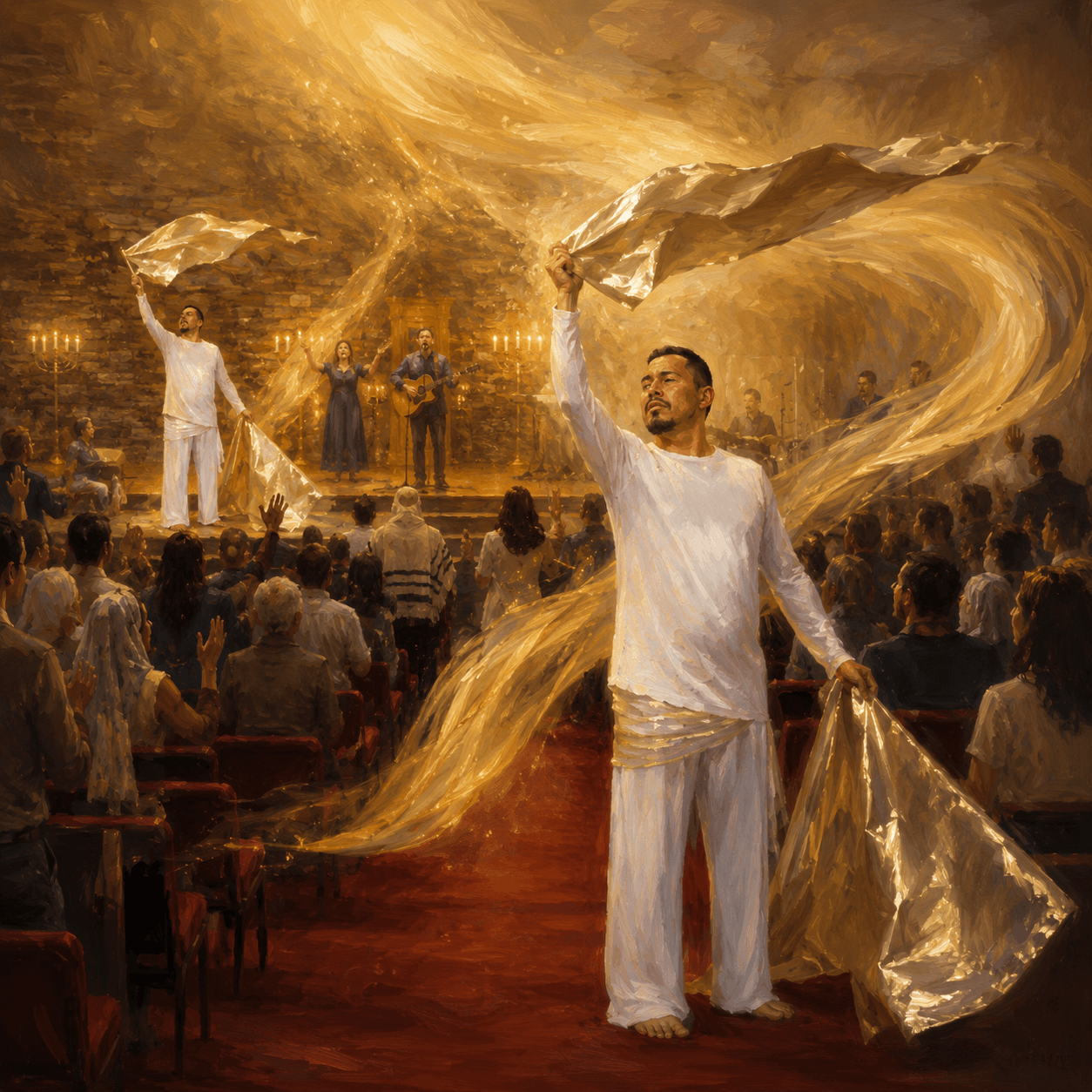
A flagging minister moving through a sanctuary draws eyes the same way David's dance drew Michal's. Some of those eyes will judge. Most won't notice what they think they're noticing; they're watching color and motion, not calculating a dress size.
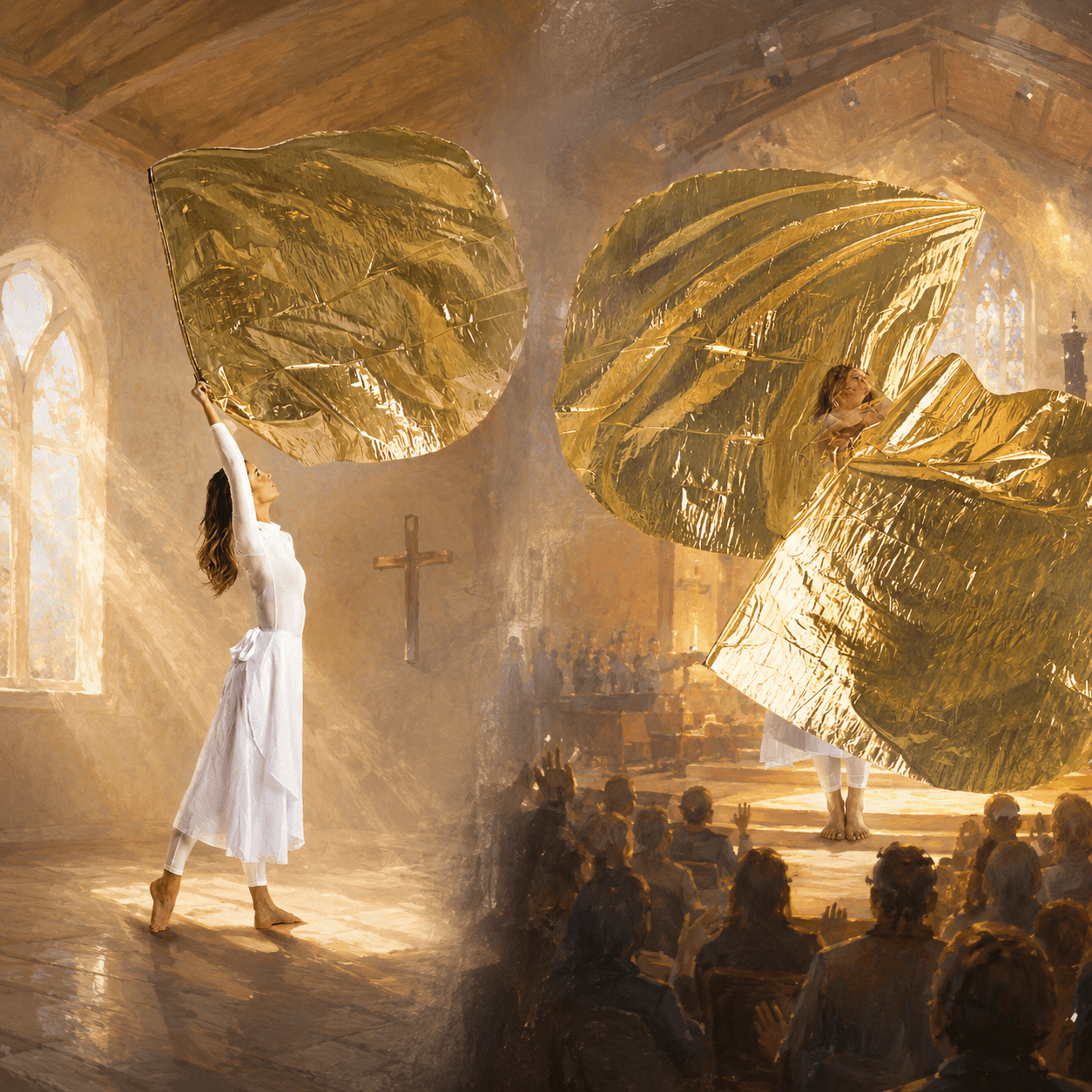
Worship flags work the same way David's dance did. People watching a flagging minister aren't cataloging body types. They're witnessing color, movement, and surrender pointed toward God.
Your Identity Is Already Settled
Identity in Christ doesn't fluctuate with a scale or a clothing size. Scripture describes every believer as chosen, holy, and blameless before Him, a description that has nothing to do with physical appearance.
He chose us in him before the foundation of the world, that we should be holy and blameless before him. ~Ephesians 1:4
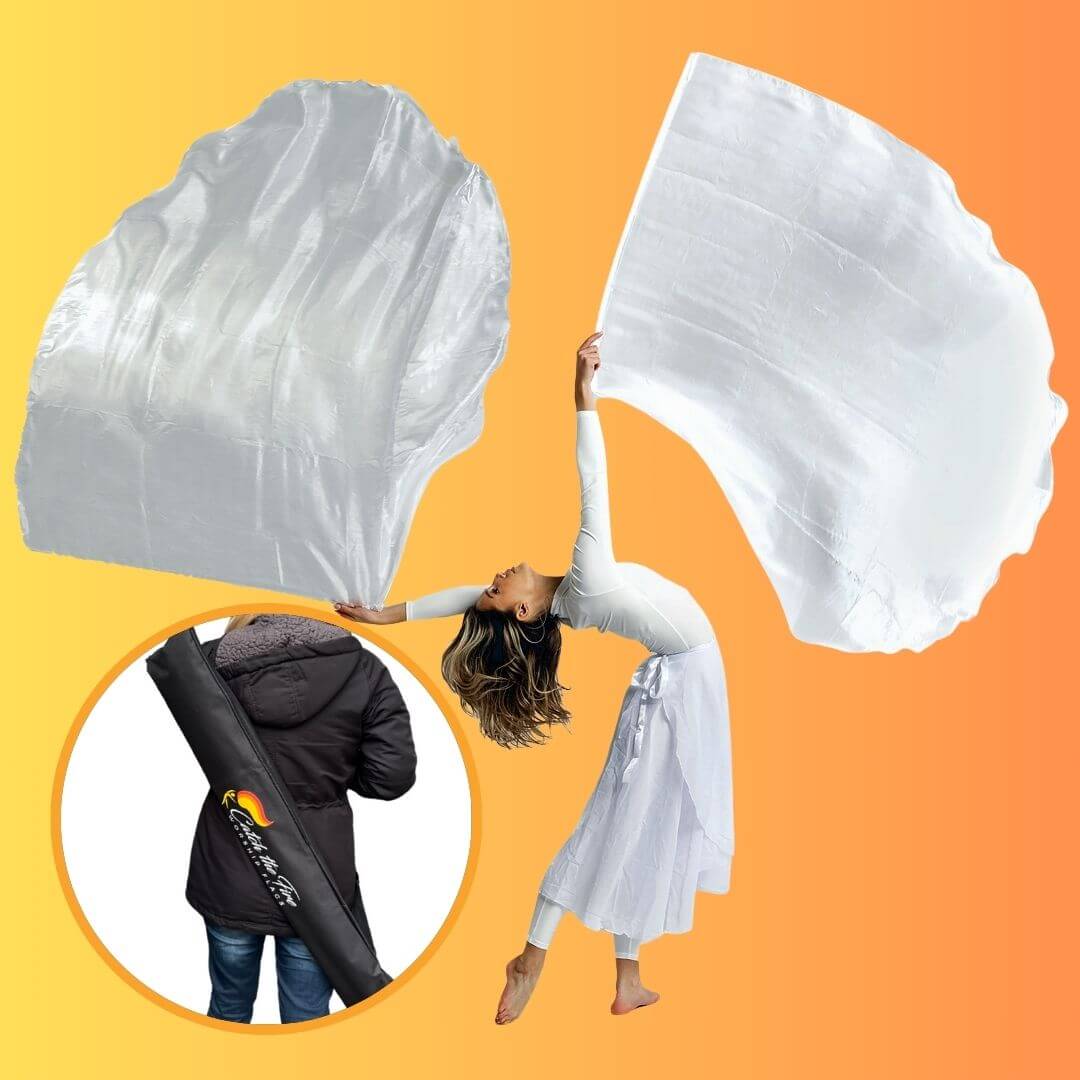
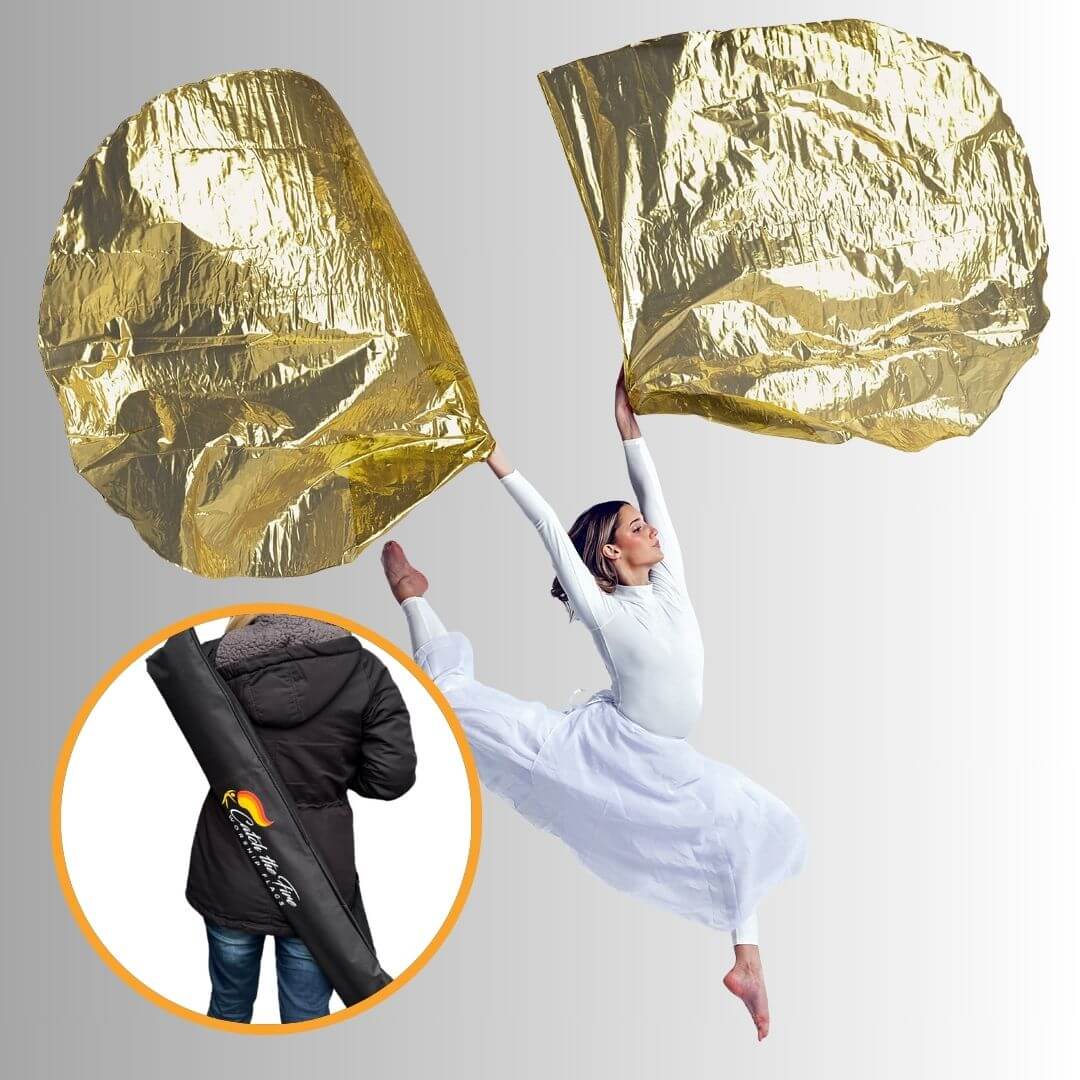
That truth sits behind the Identity Collection, flags created to declare who a worshipper already is in Christ, not who culture says they should look like. The Holy & Blameless flag puts the identity into color and movement, a visual reminder that holiness, not a body type, is what God calls out over every worshipper who lifts it.
A worshipper doesn't earn the right to worship by reaching a certain size or shape. That right was settled at the cross, long before a flag ever enters the picture.
How to Worship With Confidence
Confidence in worship rarely starts with the body. It starts somewhere else entirely.
Connect With Holy Spirit
Self-consciousness quiets down the moment attention shifts to Holy Spirit's presence in the room. A worshipper who spends a few still moments before lifting a flag, present with Holy Spirit rather than an internal critique, worships from a completely different posture.
That stillness doesn't need to be long. A few slow breaths and a simple prayer, asking Holy Spirit to take the lead, is often enough to quiet the internal noise.
The shift isn't about ignoring the body. It's about placing greater priority on Presence than on appearance.
Deepen Love for Jesus
A worshipper secure in their love for Jesus worships from devotion rather than performance. Knowing who is being worshipped, and why, frees a flagging minister to move without measuring anyone else's reaction in the room.
This isn't about working up an emotion before flagging. It's about remembering, in a very ordinary way, who is actually being worshipped in that moment.
That devotion is contagious. A worshipper who moves in wholehearted love for Jesus, regardless of size or shape, gives everyone else in the room permission to do the same.
Choose Attire That Lets You Move Freely
Comfort matters more than trend. Loose praise garments, breathable fabric, and pieces that move well with a flag help a worshipper stay focused on the moment instead of on self-monitoring.
A worshipper who has to keep adjusting a hemline or tugging a sleeve mid-flag spends worship time managing fabric instead of meeting God.
Confidence rarely comes from finding a flattering angle. It comes from clothing that disappears from a worshipper's attention within the first minute of movement.
None of this erases the real feelings a worshipper brings into a service. But those feelings don't get the final word on who's allowed to worship. Holy Spirit has already extended the invitation, and every body in the room already qualifies.
A flag lifted with a shaking hand still declares the same truth as one lifted with total confidence: God is worthy, and so is the worship brought before Him.
Worshippers ready to bring the confidence into their next worship flag can save 10% below.
FAQ
Do I need to be a certain size or fitness level to use worship flags?
No. Worship flags are created for every body type and every fitness level. Movement in worship isn't a performance skill; it's an offering, and Holy Spirit doesn't grade offerings by dress size.
What if I feel embarrassed or self-conscious using a flag in front of others?
That feeling is common, and it fades with practice and with a shift in focus. Starting in a private worship space, before ever flagging in a public setting, gives a worshipper room to grow comfortable with the movement first.
Does the Bible say anything about body image and worship?
Yes. Scripture consistently places value on the heart over appearance, from Psalm 139's description of being fearfully and wonderfully made to God's instruction to Samuel that "the LORD looks on the heart" (1 Samuel 16:7).
Can worship flags actually help with insecurity in worship?
Many worshippers find the opposite of what they expect. Instead of amplifying self-consciousness, flagging redirects attention outward toward God rather than inward toward self-evaluation, especially once the movement becomes familiar.
Do I need a certain skill level before using a worship flag in front of my church?
No. Flagging is a spiritual practice before it's a performance skill, and most churches welcome a willing heart far more readily than a polished routine. The Getting Started guide covers simple movements that any worshipper can begin practicing right away.
What's a good starting point for a worshipper working through body-image hesitation?
The Getting Started with Worship Flags guide above and the Identity Collection are both created with this hesitation in mind, pairing practical first steps with flags that speak directly to identity in Christ.
Body image isn't the only hesitation that keeps a flag folded up in a closet instead of moving in worship. Are Worship Flags Too Showy? works through the fear of being seen or judged for worshipping boldly, and When Worship Flags Are Restricted: Finding Freedom Outside the Walls speaks to worshippers navigating a church setting that isn't fully on board yet.
Catch the Fire Worship Flags is a global pioneer in prophetic flag worship, empowering flagging ministers around the world with handcrafted flags, biblical teaching, and Spirit-led tools for personal worship. Founded in 2011, we remain the original online resource for worship flags that shift atmospheres and deepen intimacy with God. We offer a wide selection of handcrafted worship dance flags for those who are called to flag... whether through prophetic movement, personal worship, or dance ministry. Our premium collection includes sheer, shimmer, metallic, and multi-layer flags designed for church services, street ministry, stage choreography, and dance performance. If you feel called to flag and are drawn to worship through movement, you're in the right place.